Your application defines the conversation
A resort collection, competition program and printed fashion line can lead to different material briefs. We start with intended use, fiber composition, fabric construction, GSM, usable width, finish and the quantity and timing needed. A generic material name is a starting point; it cannot settle stretch recovery, opacity or colorfastness expectations.
Approval belongs to a named reference
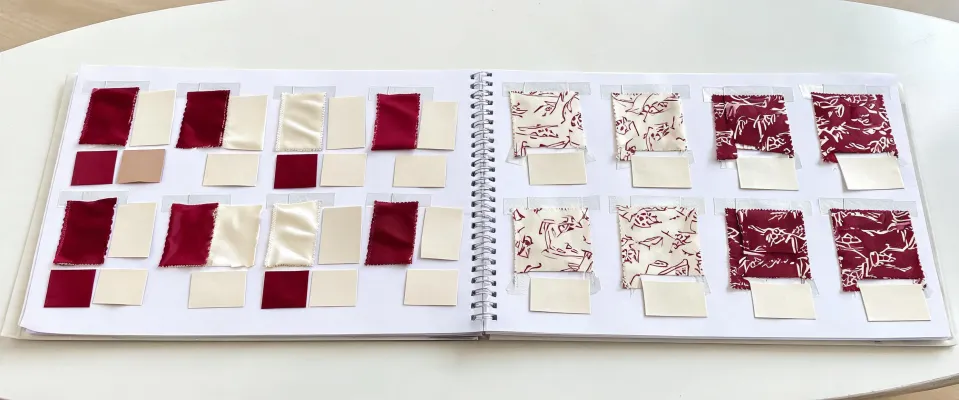
Developers and buying teams need a record they can revisit. Keep the lab dip or strike-off identity, approval date, requested adjustments and reviewer together. A swatch can communicate hand feel, while a pre-production sample connects the request to an agreed process. Neither automatically represents a later bulk dye lot. The supplier must confirm the proposed production basis.
Evidence remains attached to its source
A certificate is useful when its holder, scope and validity match the proposed supplier or product. It is not a credential of ClothWorks Supply. Likewise, a test method listing is not a passing report. Ask for article identity, sample condition, method edition, acceptance threshold and reported result before making a performance decision.
Trade-offs remain visible
Stock fabrics can suit a brief that accepts the available construction; custom work can target a specific finish or print with additional development and minimum quantities. Unit price matters, but usable width, testing, approvals and delivered scope also shape cost. We do not publish savings claims or imply that every inquiry will produce a suitable quotation.
To see the questions behind a fabric decision, visit the Material Selector. For a supplier comparison, use the service workflow. Neither page is an endorsement of a supplier or a commitment to place your order.